TRANSLATION LANGUAGES CURRENTLY SOUGHT
• French
• Portuguese — Brazilian Portuguese strongly preferred
• German
• Japanese
• Spanish
• Dutch
Please submit offers only for these languages.
Translators with experience in health, nutrition, physiology, wellness, or evidence-based consumer nonfiction are strongly preferred. Medical and metabolic terminology must be handled accurately, and the book’s safety cautions must remain clear. This is educational material, not individualized medical advice.
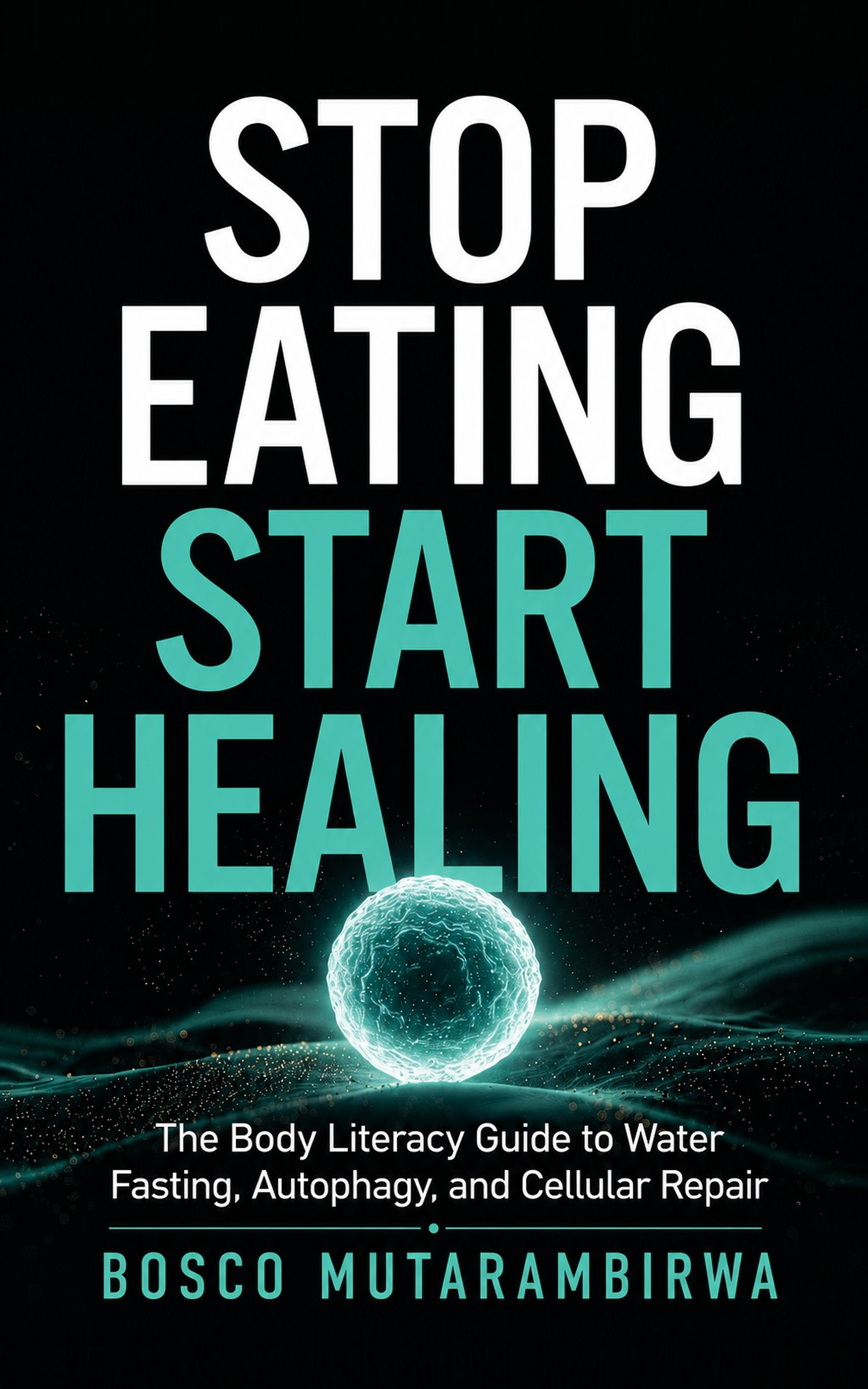
Modern life often treats an empty stomach as an emergency. Stop Eating, Start Healing replaces that fear with body literacy.
This practical, evidence-aware guide explains what changes when food stops arriving: how insulin and glycogen shift, when the body begins relying more heavily on stored fat and ketones, what researchers mean by autophagy and cellular repair, and why metabolic flexibility matters. It distinguishes intermittent fasting, one-meal-a-day patterns, 24-hour fasts, and longer water fasts without presenting any single schedule as a universal prescription.
Just as important, the book takes safety seriously. It discusses preparation, hydration, warning signs, refeeding, common misconceptions, and the people who should not fast without professional medical guidance.
Written for general readers, it translates complex physiology into clear language while avoiding miracle claims. The goal is not to glorify deprivation, but to help readers understand hunger, make informed choices, and recognize the difference between ordinary fasting discomfort and a genuine warning sign.
Readers interested in metabolic health, insulin resistance, weight management, inflammation, longevity, fasting science, and preventive wellness will find a cautious and accessible guide to the body’s response to periods without food.
Genre: HEALTH & FITNESS / NutritionThe English edition is a newly published 2026 independent release and does not yet have a notable sales ranking. The subject has broad international relevance because interest in fasting, metabolic health, insulin resistance, autophagy, and longevity crosses markets and cultures. The manuscript is approximately 22,975 words, making it a focused and manageable nonfiction translation. The author will support translated editions through DarwinPublications.com, Goodreads, LinkedIn, and related book-promotion channels.
Look around. We live in a society of unprecedented material abundance, yet chronic metabolic illness remains widespread. At almost any hour, food is within reach. Breakfast blends into snacks, snacks into lunch, lunch into afternoon treats, and dinner into late-night eating.
Most books about fasting begin with a schedule. This one begins one step earlier. Before choosing 16:8, one meal a day, a 24-hour fast, or a multi-day fast, there is a more basic problem: the modern person has often been trained to experience an empty stomach as danger.
Hunger can feel urgent without always being an emergency. The body is not a machine that stops the moment a meal is delayed. It can draw on stored energy, shift fuels, and activate maintenance pathways that receive less attention during constant feeding.
The mission of this book is not to glorify deprivation. It is to build body literacy: to explain what changes when food stops arriving, what fasting may and may not do, who should not fast without professional guidance, and how to distinguish discomfort from a warning sign.
| Language | Status |
|---|---|
|
Italian
|
Translation in progress.
Translated by Cristina García
|